[The Invisible Uninvited Guest] A Wise Guide to Completely Controlling the ‘Hantavirus’ Hidden Among Us : hantavirus in the us


[The Invisible Uninvited Guest] A Wise Guide to Completely Controlling the ‘Hantavirus’ Hidden Among Us
#is hantavirus in the us, #protest, #is hantavirus in the us, #hantavirus nj
This guide is your precious safety manual, encompassing everything from the history of medical discovery that began at the Hantan River, to the terrifying principles of how this virus attacks our bodies, practical and scientific quarantine protocols you can implement immediately in your daily life, and the golden time symptoms that separate life from death.
1. A Medical Thriller Starting at the Hantan River : The Tenacious Pursuit of a Doctor
Let us rewind the clock to 1950, to the gruesome battlefields of the Korean War. On the front lines, young soldiers without a single gunshot wound collapsed with unexplained high fevers, renal bleeding, and shock. Over 3,000 soldiers bled to death or fell into critical condition. Renowned medical staff and epidemiologists from around the world rushed to stop this strange disease, but the true identity of the culprit causing this mysterious ‘epidemic hemorrhagic fever’ remained veiled for over 20 years.

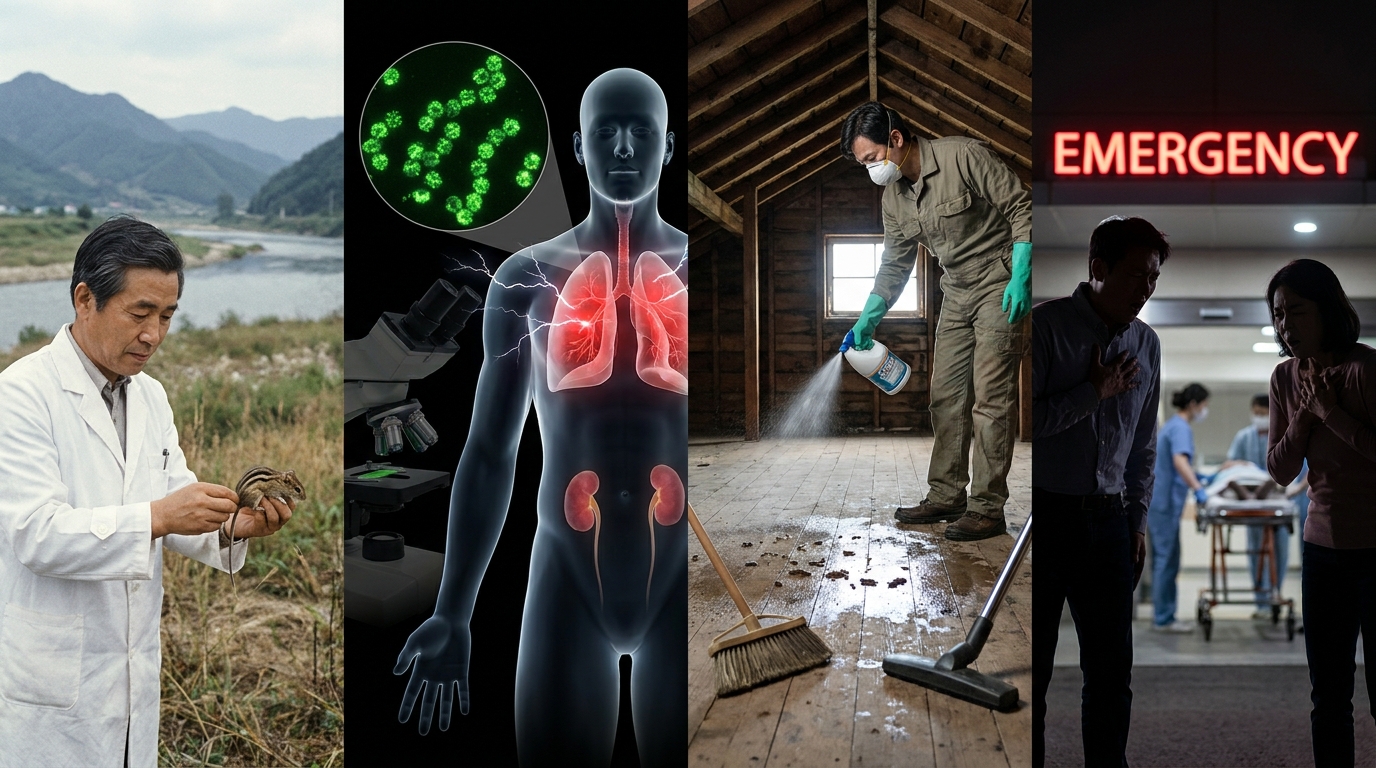
The true hero who ended this long, dark tunnel of mystery was Dr. Ho-Wang Lee of South Korea. In 1976, Dr. Lee and his research team persistently conducted research by personally capturing countless wild mice in the fields around the Hantan River, which flows through Dongducheon, Gyeonggi Province. Finally, they succeeded in discovering this terrifying virus for the first time in the world inside the lung tissue of a small wild rodent called the ‘striped field mouse’. Named the ‘Hantaan virus’ after the river where the historical discovery was made, this was the brilliant and miraculous moment when humanity first clearly recognized the massive entity known as the Hantavirus.

What is fascinating and terrifying is that this virus ‘transforms’ according to the local ecosystem. The subtype found in Asia, including Korea, primarily attacks the kidneys fiercely. However, a mutant strain that caused sudden deaths mainly among young people in New Mexico, USA, in 1993, evolved to directly strike the lungs rather than the kidneys, stopping respiration altogether.
2. A Massive Storm Raging Inside Our Bodies : “Drowning Outside of Water”
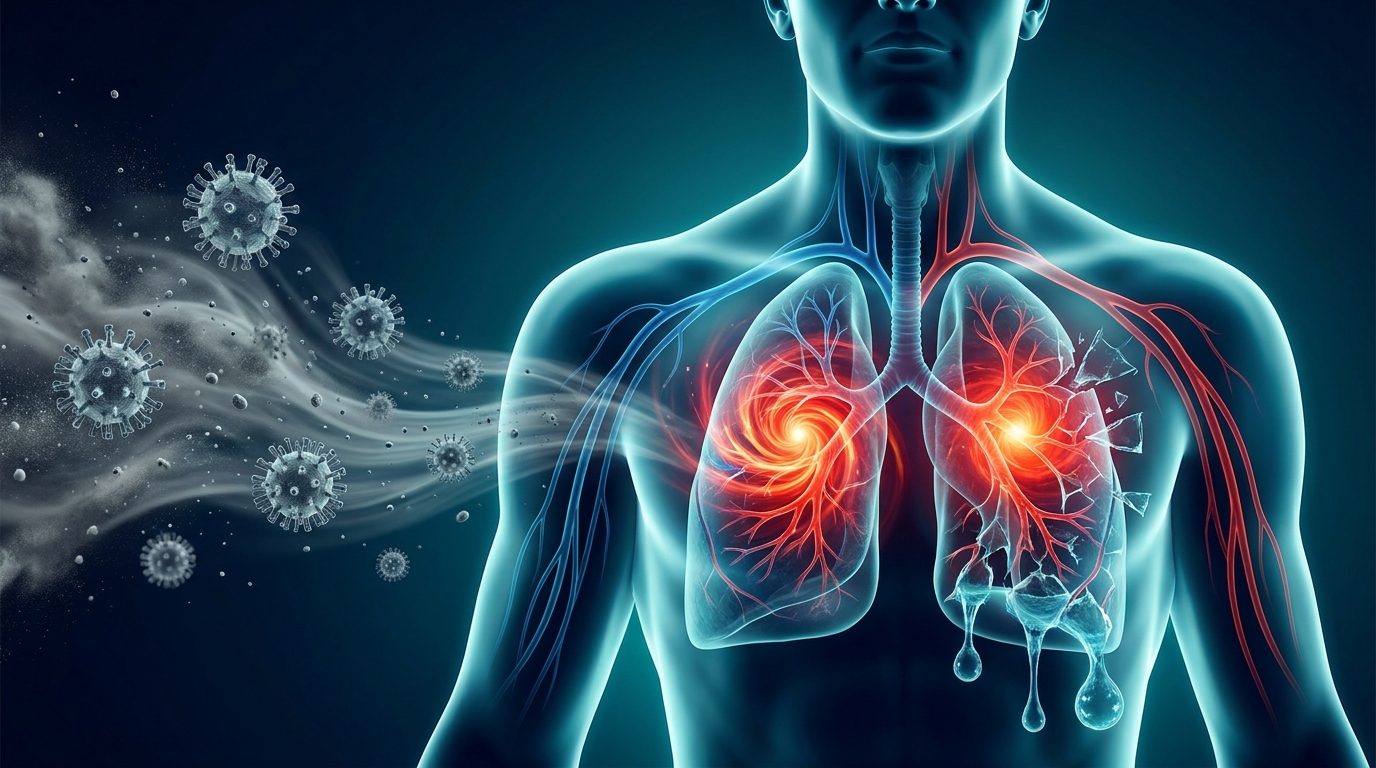
The reason Hantavirus boasts such a terrifying mortality rate is, paradoxically, because it cleverly exploits the immune system meant to protect our bodies. When we inhale fine dust mixed with the dried feces or urine of infected mice, these viral particles stealthily settle into the thin endothelial cells of the capillaries located in the deepest part of the lungs.
When the emergency alarm rings signaling a viral invasion, our body’s immune cell troops rush furiously to the lungs to annihilate the intruder. The problem is that this defensive reaction spirals out of control and occurs far too violently.
In the medical community, this is called a ‘Cytokine Storm’. To put it simply, it is like detonating thousands of grenades in the middle of your living room just to catch a single mouse that broke into your house. In the aftermath of this excessive explosion, microscopic holes are punctured throughout the capillary pipes in the lungs, which are supposed to remain sturdy to prevent liquid from leaking.
Eventually, blood plasma and fluids constantly leaking from the punctured blood vessels pour like a waterfall right into the alveoli (air sacs) where we are supposed to breathe. Even though the patient is clearly lying on a soft bed on land, they reach a horrifying and tragic state of ‘drowning from the inside’ due to the body fluids escaping from their own body. This is the terrifying reality of Hantavirus Pulmonary Syndrome (HPS), where symptoms rapidly deteriorate after onset, pushing the mortality rate to nearly 30 to 40%.
3. Is Our Neighborhood Truly a Safe Zone? Regional Risk Check
The risk level of Hantavirus varies greatly depending on what kind of wild mice live around us. Just because they are invisible does not mean they are not there. Please check the environment of the places you currently live in or plan to visit this weekend.
- Western North America and South America : The ‘Deer Mouse’, widely inhabiting areas like New Mexico, Arizona, and Colorado, carries a very virulent virus that causes Hantavirus Pulmonary Syndrome (HPS) with an extremely high mortality rate. Those who camp in forest cabins or hike on remote trails need extra vigilance.
- Asia and Europe (Including Korea) : The ‘striped field mouse’, commonly seen in fields or wild mountains around us, primarily transmits ‘Hemorrhagic Fever with Renal Syndrome (HFRS)’, which causes fatal kidney problems. It starts like a severe cold, but gradually blood pressure drops to dangerous levels, and kidney function paralyzes, leading to anuria (no urine output). This is why you must be careful during autumn harvests, outdoor farm work, or visiting ancestral graves.
- Urban Areas : Could you possibly be safe in the middle of a city covered in asphalt? We must never forget that the ‘Seoul Virus’, transmitted by Norway rats living in city sewers or back alleys, can lie dormant in any giant metropolis worldwide, including not just Seoul but also New York and London.

4. “Put Down That Broom Right Now!” – Smart Defense Protocols
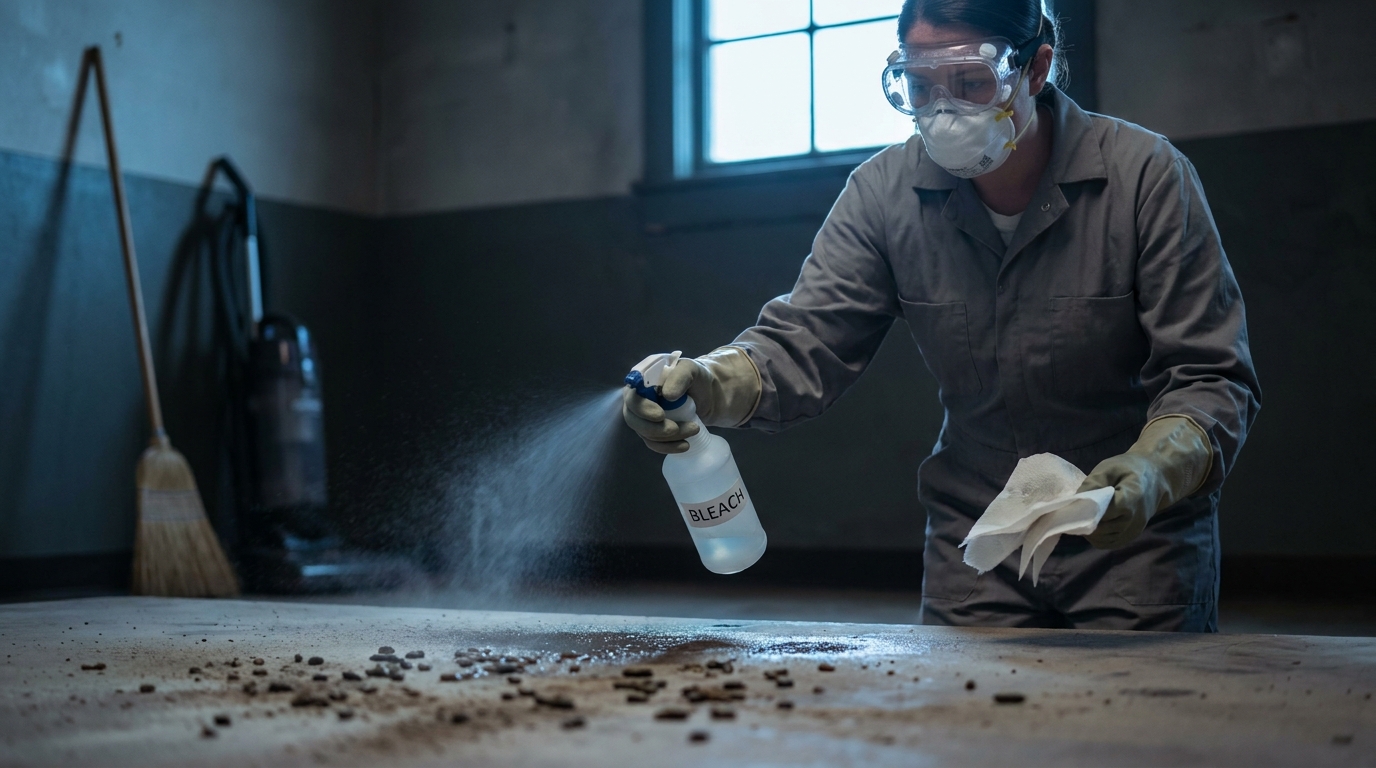
When you open the door to a countryside storage room after a long time, or find traces of mouse droppings or a dry nest in a corner of your porch, what is the first thing you do? Nine times out of ten, you will grab a broom and sweep it away or bring a vacuum cleaner to suck it up. However, this is the most fatal mistake you absolutely must never make.
The act of physically sweeping dry droppings with a broom is like lighting a match to a quietly sleeping viral powder keg. Millions of viral particles trapped inside the droppings instantly take flight into the air (aerosolize) due to physical friction, forming a massive dust cloud that pours straight into our noses and lungs the moment we take a breath. Therefore, you must remember and practice a ‘chemical neutralization’ method, not physical impact.
Establish a strict containment line : Mice are much more flexible than we imagine. Even with a small gap of about 6mm (roughly the thickness of a pencil), they will fold their bones and squeeze into the house. Meticulously filling holes around pipes, door frames, and exterior walls with steel wool (which mice cannot gnaw through) or silicone is the best long-term vaccine.
5. SOS Signals from the Body : Never Ignore the Warnings of a Sinking Cruise Ship
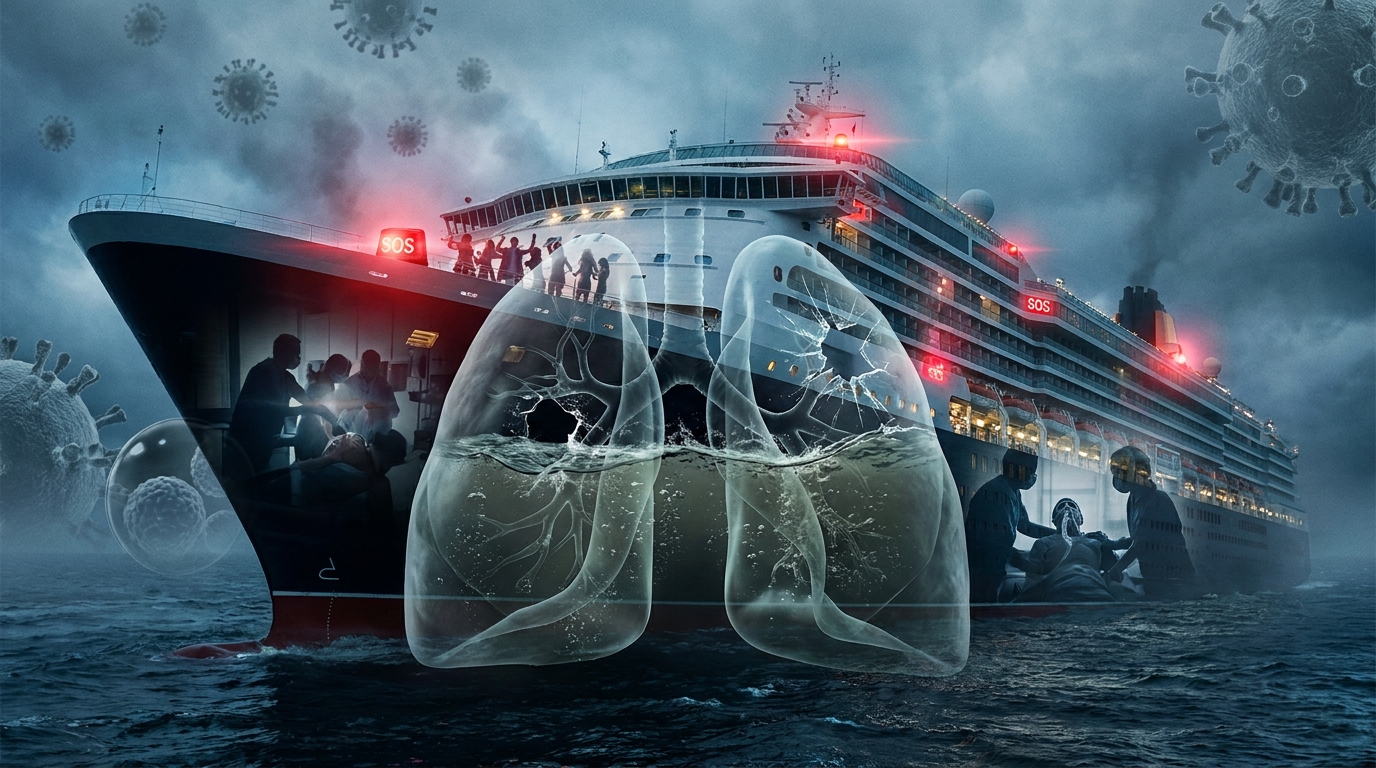
Imagine a massive luxury cruise ship sailing the ocean. A small hole is punctured in the bottom of the hull, and water begins to seep in. For the first few days, passengers in the upper cabins ignore the subtle tilting of the ship, attributing it merely to the ‘waves’, and continue to enjoy the party. However, while they dance ignoring the warnings, water fills the cabin floors and the engine stops. Only then do people scream and look for lifeboats, but the situation has already become unmanageable, and the ship sinks into the deep sea.
The way Hantavirus destroys our bodies is exactly like the tragedy of this cruise ship. Too many people mistake the initial symptoms for just a ‘mild flu’ or ‘fatigue’ and leave them untreated. While they endure these ‘minor-looking’ symptoms and rely on painkillers, they tragically miss the fatal golden time when water fills their lungs. After a quiet incubation period of 1 to as long as 5 weeks after exposure to the virus, our bodies send out desperate SOS signals in two stages as follows.
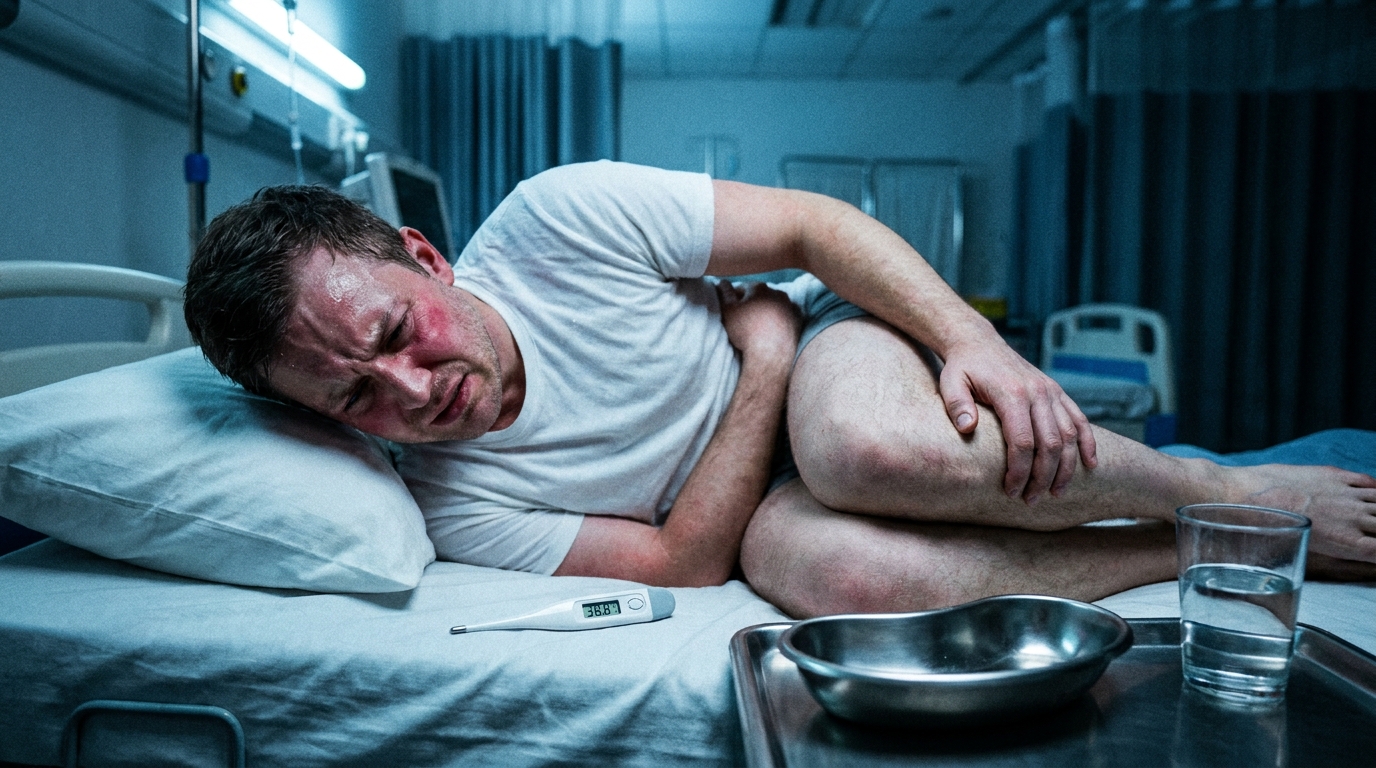
[Stage 1 : The Silent Warning – Initial Prodromal Phase] (Occurs 1 to 5 weeks post-exposure, lasts 1 to 5 days) During this period, it starts very similarly to a cold, flu, or enteritis, but its intensity hits much heavier and rougher.
- Severe muscle aches as heavy as lead : This is not simple fatigue after outdoor activities. A heavy pain, as if ‘tens of kilograms of lead weights are hanging’, strikes the large muscle bundles, especially both thighs, lower back, and shoulders. Due to the flesh pain, which feels like being severely beaten with a baseball bat, even tossing and turning in bed feels like agonizing torture.
- Chills and fever that feel like your bones are shattering : The thermometer quickly shoots well over 38 degrees Celsius (100.4 degrees Fahrenheit). Even in the heat of midsummer, a vicious chill sets in, feeling as if you are frozen down to your bones. Your forehead boils like a fireball, but your whole body trembles uncontrollably like an aspen leaf.
- Unexplained sharp abdominal pain : This is on a different level from typical bloating after eating spoiled food or overeating. Extreme abdominal pain, as if the pit of your stomach is being tightly squeezed by something sharp, is accompanied by nausea, vomiting, and diarrhea. This pain is so intense that patients sometimes mistakenly visit the surgical department thinking it is appendicitis.
[Stage 2 : The Incoming Tsunami – Critical Respiratory Crisis Phase] (Between 4 to 10 days after initial symptoms appear) If you dismiss the warnings of Stage 1 as the flu, within ten days at most, massive seawater will begin to pour into the cruise ship in earnest. The crucial difference from a simple cold appears at this point, as water fills the alveoli.
- Destructive, crushing pressure on the chest : At a seemingly peaceful moment, an immense pressure, as if ‘a giant boulder or an elephant is sitting on your chest’, crushes your entire ribcage.
- Difficulty breathing as if breathing through a soaked sponge : Breathing, which used to be normal and natural, starts to get choked up. As your body’s fluids pour into your lungs, a terrible and desperate sense of suffocation strikes, exactly like ‘trying to force air in through a thick, water-soaked sponge pressed against your mouth’. Even though you are clearly standing on dry land, a sense of terror akin to sinking deep underwater is accompanied by dry coughing and harsh panting at a rapid rate of over 30 times a minute.
The ‘Aha!’ Moment That Separates Life and Death : The puzzle piece of survival you must absolutely remember is this. High fever and muscle aches can happen to anyone in life. However, you must not only look at the symptoms but connect them to ‘your past movements and locations’.
If a memory flashes through your mind saying, “Right! I cleaned the dusty attic of the country house 3 weeks ago”, or “I cleared away mouse droppings when pitching a tent at the campground 2 weeks ago”, but then, “Why is my chest suddenly feeling tight and breathing becoming suffocatingly hard today?”
If it is a simple cold, your breathing does not suddenly become rapid like a fish out of water. The very moment these two puzzle pieces (exposure to mouse dust + sudden shortness of breath or severe body aches) fit together! Aha! It is not a simple cold! The moment you realize this is the absolute timing to rush into the emergency room without delay. The 3-second shout to the doctor the moment you open the hospital door, saying, “I have cleaned an old space with mouse droppings within the last month”, will be the only lifeboat to pull you out of the sinking cruise ship.
6. Choice Insight : A Humble Mind Respecting the Invisible Line
We live in a dazzling era of technology where artificial intelligence writes texts, robots perform surgeries, and spaceships explore Mars. However, the existence of the Hantavirus chillingly reminds us of how flimsy and paper-thin the boundary between nature and humans truly is. No matter how great the scientific achievements humanity has made, we are still finite beings whose candles of life can be jeopardized by a single microscopic trace left by a tiny wild mouse in the corner of a yard.
Yet, managing the risk of infectious diseases does not mean locking the doors and trembling in vague fear. It means clearly recognizing that biological traps threatening us can exist even in the small, peaceful dust in the corner of a shed, and making the intelligent and rational decision to ‘chemically and physically control’ that microscopic world thoroughly.
The core of prevention to protect life never lies in grand or expensive equipment. A single bottle of household bleach mixed in a spray bottle at the right time, and one small but firm rule stating, “I will never sweep with a broom and stir up dust”, bridge the massive gap between our complacency and survival. Remembering and adhering to the most seemingly trivial basic principles is the most powerful biological defense system through which humans can protect themselves against the threats of nature.
7. Core Summary (TL;DR)
Lastly, let us clearly summarize the essential knowledge for survival we explored today once again.
- Historical Pride : This is a great discovery that will remain in the history of human medicine, first identified in the world from mice in the Hantan River basin by Dr. Ho-Wang Lee of South Korea in 1976.
- Fatal Mechanism : Beyond the virus itself destroying us, it has a ‘deceptive and fatal’ characteristic of overly stimulating our body’s immune response (Cytokine Storm) to make the lungs fill with water, suffocating us from the inside.
- Strict Cleaning Rules : Dry cleaning (sweeping with a broom, vacuuming) is a shortcut to death and is absolutely forbidden! You must wear a mask, generously spray a diluted bleach solution (Water 10 : Bleach 1), wait 5 minutes for the virus to die, and then carefully wipe it away while wet.
- Golden Time Symptoms : If you begin to feel crushing chest pressure and severe shortness of breath along with muscle aches that feel like being hit by a baseball bat after outdoor activities or cleaning an old space within the past month, you must go to the emergency room immediately without a single second of delay. Informing them of your past ‘mouse exposure history’ during the consultation dramatically increases your survival rate.
Thoroughly controlling the microscopic gaps in the spaces you stay and your surrounding environment is the surest and wisest way to protect your irreplaceable family and your own life. We sincerely hope you have a secure and safe daily life, always awake to invisible threats!
이 콘텐츠의 이미지는 AI 모델의 지원을 받아 생성되었습니다.