[The Shift from UFO to UAP] Truth and the Control Mechanisms of Geopolitical Power : The UFO Files Release


[The Shift from UFO to UAP] Truth and the Control Mechanisms of Geopolitical Power : The UFO Files Release
Have you ever considered that beneath the shift in terminology from UFO to UAP lies a complex entanglement of geopolitical competition, technological supremacy, and public control?
This is no mere change in nomenclature. The U.S. government’s release of the UFO files transcends simple transparency ; it signifies a fundamental restructuring of our global scientific, political, and economic paradigms.
Led by the United States, the disclosure of these files does far more than merely satisfy public curiosity. It lays bare the reality of a fierce, geopolitical shadow war among major powers and the covert mechanisms of information control. Let us take a moment to reflect upon the truths hidden behind this recent declassification and the ways in which geopolitical power quietly exercises its control.
Section 1 : The UAP Strategy and Calculated Timing Behind the Release of UFO Files
What might be the true reason behind the U.S. government’s sudden release of UFO footage in 2020?
While they ostensibly emphasized transparency and a scientific approach, I am inclined to believe that much more complex geopolitical calculations were actually at play. An analysis of the Pentagon’s timing regarding the UFO files release reveals an intriguing pattern: the official release of the footage in April 2020 coincided with the early stages of the COVID-19 pandemic, while the publication of the UAP report in 2021 occurred just as the technological hegemony rivalry between the U.S. and China was intensifying. It is difficult to view this as a mere coincidence.
Observing the recent trend of UFO file releases spearheaded by the Department of Defense and various intelligence agencies, one might cautiously suggest that these actions are by no means accidental, nor are they passive measures reluctantly taken under pressure from whistleblowers. This is fundamentally because the control and disclosure of information are, in and of themselves, the most critical assets of national security.
For decades, the U.S. government maintained a stance of strict denial and concealment regarding unidentified flying phenomena. However, it appears they have had to confront a new reality: complete obfuscation has become virtually impossible due to the advent of the information age and the exponential advancement of civilian observation technologies. Under these circumstances, the U.S. government seems to have entirely recalibrated its strategic direction. In other words, rather than risking the uncontrollable leakage of information, they have adopted a strategy of “controlled disclosure”—gradually releasing information within a framework and at a pace of their own choosing.
The crux of this strategic calculation lies in their determination not to lose the initiative in setting the global agenda. By steering public and media attention in specific directions, and by ensuring that the Department of Defense monopolizes both the extent of the disclosures and their subsequent interpretations, they continue to maintain their standing as the apex predators of information warfare. Ultimately, we might cautiously consider this phenomenon not merely as an endeavor to uncover the truth, but as a textbook example of how state institutions orchestrate and execute grand narratives.
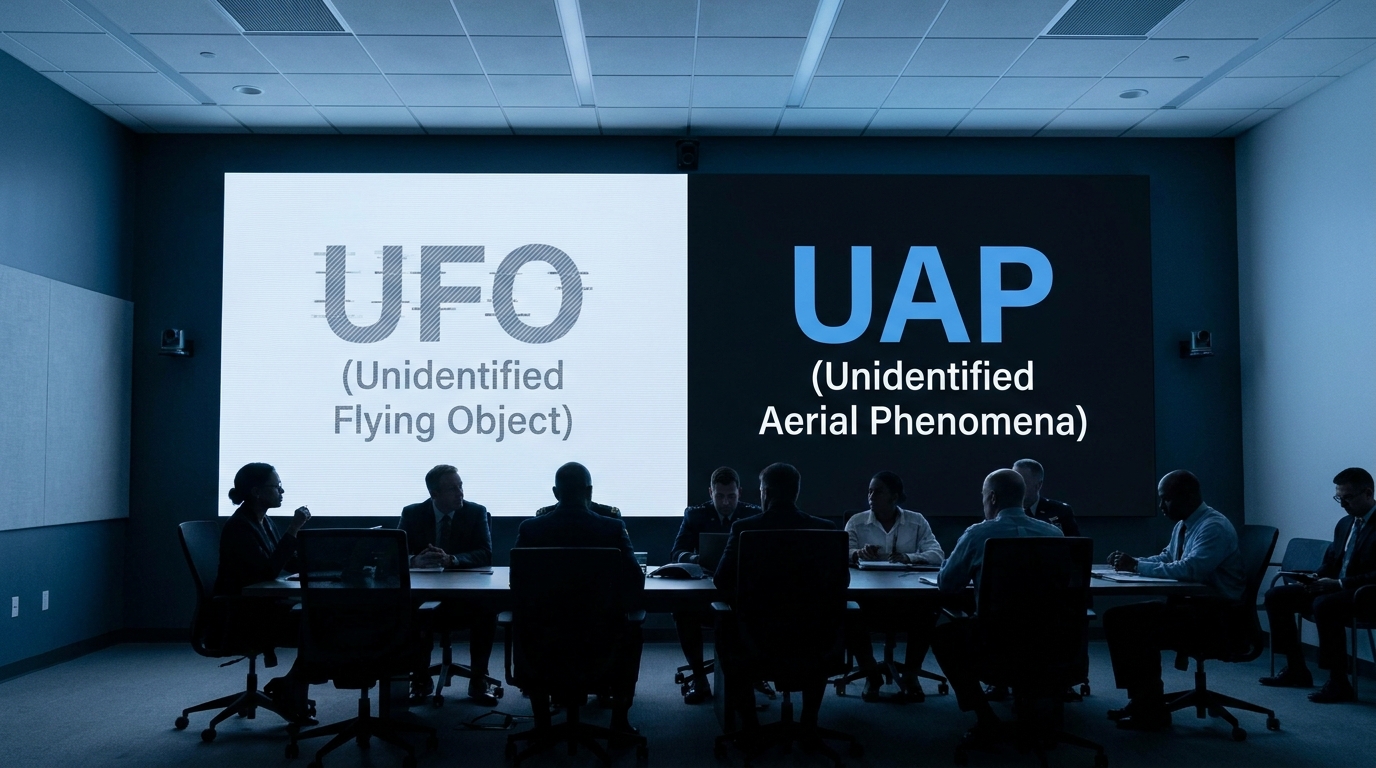
Section 2: The Hidden Purpose of the UFO Files Release as a Geopolitical Weapon
Furthermore, we must not overlook the fact that this phenomenon is evolving into a highly potent geopolitical weapon within the framework of a new Cold War. The United States is linking unidentified phenomena—observed within its own airspace or near major military installations worldwide—to the possibility that they are cutting-edge drones or reconnaissance assets belonging to potential adversaries. This serves as an exceptionally sophisticated diplomatic and military instrument, exerting unspoken pressure on rival nations such as China and Russia. If these objects are indeed the technology of hostile states, the U.S. secures a pretext to consolidate its alliances and justify the establishment of large-scale defense networks.
Conversely, should these objects prove to be something that transcends human technology, the U.S. can firmly impress upon its allies a clear message: in the face of unknown threats, American military and intelligence capabilities remain the sole protective shield. The activities of the organizations established within the Department of Defense can also be understood in this context. To verify the official stance of the department dedicated to the collection and analysis of such intelligence, one may refer to the official website of the U.S. Department of Defense’s AARO to observe how they define and address threats on a global scale.
Ultimately, the release of the UFO files transcends a mere aerial mystery; it operates as a meticulously calibrated geopolitical lever designed to reshape the global power landscape and perpetuate U.S. military hegemony.

Section 3: The UAP-Industrial Complex: The Emergence of a New Economic Ecosystem and Warning Signs
In examining this subject, another profound pillar that demands our attention is the collusion between capital and power—namely, the genesis of the “UAP-Military-Industrial Complex.”
While the military-industrial complex of the Cold War era absorbed astronomical defense budgets to counter the distinct adversary of the Soviet Union, it has now seemingly evolved, driving its expansion by leveraging the novel, boundless threat of unidentified anomalous phenomena. With this phenomenon now officially enlisted among the national security threats reported to Congress by the Department of Defense, an avenue has been opened for tens of billions of taxpayer dollars to be legally channeled into the development of cutting-edge radar systems, satellite networks, and next-generation interception weaponry designed to detect, track, and defend against it.
Perhaps of even greater concern is the reality that a substantial portion of this research and its associated assets is being transferred not to government agencies, but rather into the deeply guarded vaults of private defense contractors. Because private corporations operate relatively beyond the reach of the government’s Freedom of Information Act (FOIA), they are afforded the opportunity to monopolize technological development through classified funds—often referred to as “Black Budgets”—free from external oversight or rigorous congressional control. Ultimately, one might carefully conclude that beneath the highly publicized issue of UFO file releases lies a deeply entrenched cartel of interests—forged between defense contractors and intelligence agencies—which seeks to generate immense profit by amplifying the perception of a threat, thereby securing a permanent, monopolistic grip on revolutionary technologies.
Section 4: An Analysis of the UFO Files Release Strategy as a Mechanism for Public Control
Perhaps the most overlooked aspect of this phenomenon is that the release of UFO files represents a new paradigm of public control. While traditional information control was achieved through concealment and denial, it appears that control in the UAP era operates through selective disclosure and the monopolization of interpretation.
A close examination of the United States government’s UAP disclosure strategy reveals what seems to be a highly sophisticated psychological design.
First, public shock is carefully minimized through a process of graduated disclosure. Disclosing everything at once could risk social upheaval; however, a phased release allows the public to adapt gradually.
Second, there is a monopolization of interpretation that leverages scientific authority. Official interpretations of the UAP phenomenon are disseminated exclusively through government-sanctioned scientists and institutions. By doing so, the government manages to release information while firmly retaining control over its meaning and significance.
Third, one must note the strategic utilization of uncertainty. Rather than providing definitive answers, responses such as “it remains unknown” or “further investigation is required” serve to stimulate public curiosity without inciting concrete action. In essence, curiosity is satiated while behavioral responses are gently suppressed.
The efficacy of this strategy is, in fact, demonstrably evident. Following the release of the UFO files, public interest in UFOs and UAPs has surged; yet, this has not translated into political activism or meaningful social change. Rather, the public appears to remain in a passive state, merely awaiting the government’s subsequent disclosure schedules.
A matter of deeper concern is the potential erosion of critical thinking. As a simplistic trust—often framed as “it must be reliable because the government released it”—begins to spread, healthy skepticism regarding the authenticity or the underlying intent of the disclosed information may paradoxically diminish. This suggests that, rather than enhancing transparency, information disclosure could be utilized as a novel instrument for public opinion manipulation.
The international proliferation of this approach also merits close observation. Following the UAP disclosures by the United States, several nations—including the United Kingdom, France, Japan, and Brazil—have adopted remarkably similar policies. However, a comparative look at the contents and methods of disclosure across these nations reveals a strong inclination to mirror the American framework. This leads one to consider that the UAP discourse itself may be evolving into an instrument of United States-led global hegemony.
Section 5: The Crisis of Scientific Methodology: Epistemological Problems Raised by UAP Research
One of the most concerning side effects following the UFO Files Release has been the disruption of scientific methodology itself. Because UAP research directly challenges the foundational premises of established science, it possesses the potential to impact the overarching credibility of the scientific discipline as a whole.
As is widely recognized, traditional science rests upon reproducibility as a core principle. However, UAP phenomena are, by their very nature, unpredictable and beyond experimental control. Because we cannot anticipate when, where, or in what form they might manifest, reproducing these events under laboratory conditions remains an impossibility; this, in turn, gently exposes the fundamental limitations of our current scientific methodologies.
A further issue presents itself regarding the quality of the available evidence. The majority of UAP data depends upon eyewitness accounts, radar telemetry, and video recordings, all of which leave considerable room for interpretation. It is quite common for researchers to arrive at entirely disparate conclusions while examining the exact same dataset. Consequently, we may find ourselves in situations where subjective interpretation inadvertently takes precedence over objective fact.
Of particular concern is the potential proliferation of confirmation bias. There appears to be a tendency among some scientists engaged in UAP research to unconsciously and selectively accept only the evidence that supports their preferred hypotheses. This threatens to respectfully undermine falsifiability, which serves as a cornerstone principle of scientific inquiry.
Furthermore, the established peer review system may also be placed at risk. UAP research papers are frequently rejected by conventional academic journals, resulting in their publication solely within newly established UAP-specialized periodicals. As a result, rigorous academic quality control may not be properly maintained, which could blur the necessary boundaries between rigorous science and pseudoscience.
The complications extending into interdisciplinary research are equally significant. While UAP research naturally intersects with diverse fields—such as physics, psychology, sociology, and political science—each discipline adheres to its own distinct methodologies and evidentiary standards, rendering the formation of a consistent conclusion quite difficult. Because a physicist may focus on sensor data, a psychologist on the cognitive biases of the witnesses, and a sociologist on collective phenomena, we may encounter a landscape dominated by fragmented interpretations rather than a cohesive, integrated understanding.
Conclusion: The Truth of the UAP Era and the Choices Before Us
As we have explored, the United States government’s movement toward releasing its UFO files is by no means a mere indulgence of public curiosity, nor is it a pure, unvarnished step toward cosmic truth. Rather, it appears to be a meticulous strategic calculation designed to maintain dominance over information, serving as a potent geopolitical instrument to pressure potential adversaries and keep allies in check. Furthermore, it functions as a survival strategy for the UAP-military-industrial complex—justifying the monopolization of classified technologies and the securing of vast defense budgets. Simultaneously, it acts as a socio-psychological mechanism to redirect the gaze of a fractured public outward, thereby reinforcing domestic control. Ultimately, it offers a sobering glimpse into a quiet crisis within modern science, where the imperatives of military security steadily encroach upon the objective pursuit of truth.
We must, therefore, step away from the simple romance of looking up at lights in the night sky and imagining extraterrestrial visitors. Instead, we are called to look clearly at the profound chess game of power playing out here on the ground regarding this phenomenon. Rather than uncritically applauding the release of such information, we find ourselves in a time that demands deeper insight. We must continuously ask what underlying intentions dictate why this information is being disclosed now, at this specific moment in history.
What is required of us is neither blind trust nor blind dismissal. It is an earnest, enduring effort to approach the truth through critical thinking and independent verification. Perhaps even more than the UAP phenomenon itself, it is the underlying power structures and vested interests managing the narrative that we must acutely and thoughtfully analyze.

Moving forward, there are three key indicators that warrant our attention :
First, shifts in the UAP disclosure policies of various governments and the geopolitical calculations underlying them.
Second, the growing scale of the UAP industrial complex and its impact on scientific research.
Third, changes in public perception and whether these shifts ultimately translate into political action.
Ultimately, I am led to wonder if the true mystery lies not in the cosmos, but rather in how this phenomenon is being utilized as an instrument to maintain and consolidate hegemony.
The images in this content were generated with the assistance of an AI model.